Ask any type of center supervisor who has run a real-time emptying and they will inform you the very same point: clear aesthetic cues save mins, and mins conserve lives. Among those cues, the chief warden hat colour does a lot of heavy lifting. It signals authority, cuts through noise and panic, and gives residents a focal point when instructions start taking on adrenaline. Yet, confusion persists concerning the right colours, where standards use, and just how to use them in genuine work environments with mixed uniforms, PPE, or branding guidelines.
I have run emptyings in workplaces, warehouses, mixed-use universities, and remote websites. The exact same principles apply, yet the information do not. This short article brings together the requirements that underpin warden identification, lessons from training frameworks such as PUAER005 and PUAER006, and useful means to execute a robust emergency situation control organisation that functions under pressure.
The short response on hat colours
In Australian practice straightened with AS 3745 - Planning for emergency situations in centers, the accepted convention is:
- Chief warden: White hat or helmet Deputy chief warden: White hat or helmet with a distinct noting or additional identifier Floor or location warden: Yellow hat or helmet Warden or interactions policeman: Red hat or helmet First help policeman: Eco-friendly hat or helmet
These colours mirror many providers' typical sets, evacuation layouts, and training materials, and they match what people anticipate to see during drills. Some websites add striping, lettering, or high-visibility stickers to separate roles at a glimpse. When international groups check out Australian websites, they usually acknowledge the white-for-chief pattern promptly, even if their home-country convention differs.
If your question is just, what colour helmet does a chief warden wear, the response is white. The rest of this post breaks down the why, exactly how, and what to watch for when you apply that in active workplaces.
Where the convention comes from
Colour coding for wardens is a human aspects remedy. In a concerned setting, people seek authority signals prior to they process language. High-contrast, brilliant colours on the head and shoulders attract the eye in crowded passages or great smoky conditions. The white safety helmet for the chief warden attracts attention versus common high-vis yellow or orange and against darker streetwear, while still pairing with a white tabard or vest for redundancy.
AS 3745 does not mandate coloured safety helmets especially. It calls for that participants of the emergency situation control organisation be recognizable. Gradually, the industry merged on safety helmets or hats since they rest high, they show up over heads, and they double as basic security during an action. Vests, armbands, collared lanyards, and significant clipboards are all legitimate additions. Safety helmets, however, remain the most reputable "spot me fast" device.
Training frameworks also strengthen the practice. The PUAER005 system (usually provided as PUAER005 operate as part of an emergency control organisation and commonly searched as puafer005) prepares wardens to do their features and communicate effectively with owners and emergency situation services. The PUAER006 system (puafer006 lead an emergency control organisation) trains chief wardens to lead, choose, and collaborate the entire response. Both systems presume clear role identification, and many licensed training organisations teach the colour convention alongside procedures.
Why a regular colour scheme matters more than the specific tint
I have seen sites try to tailor-make hats to match corporate branding. It looks cool in a pamphlet, then crumbles in a drill. People grab what their minds already relate to roles. The minute you transform red to navy or yellow to lime, you melt time re-training that association and you increase the opportunity someone complies with the incorrect individual throughout a smoke alarm or hazmat release.
Consistency wins over appearances. If you inherit a site where wardens utilize vests as opposed to helmets, maintain the colours straightened with the common plan. If your chief warden declines a headgear as a result of hardhat fatigue on construction-adjacent websites, a white headgear cover, white tabard, and bold "CHIEF WARDEN" chest-back text can achieve the exact same result. The general rule: one glimpse, one conclusion.
Applying the criterion in different workplaces
Office towers are uncomplicated. Warehouse, information facilities, labs, and medical facilities include complexity. The challenge is integrating hat colour with existing PPE and operational policies without shedding clarity.
In stockrooms with required hardhats, I have actually used white hardhats completely stickered for the chief warden and deputy chief warden, and clip-on high-vis white helmet covers for assigned alternates. Flooring wardens lug yellow hardhats in a plainly labeled wall surface cabinet near the fire panel and at muster factors; lots of leave them hanging on hooks outside their locations so they do not lose time fetching equipment throughout an alarm system. Communications police officers, that usually stay at the panel or the command post, usually put on red vests over their workwear since they do not need the head protection as much.
In medical facilities, white can clash with clinical attires. The fix is not to alter chief warden to blue, but to include strong white helmets paired with tabards that print role name in contrasting black, big font style, front and back. Scientific team respond swiftly to the role name when an emergency code is revealed. The light self-control in wards indicates safety helmets are only worn by the responding wardens, not all the professional personnel, so visibility still works.
On construction sites, every person puts on a hardhat. The solution is straight safety helmet colour positioning, with white for the chief and yellow for area wardens. Since professionals' hats differ by company plan, most principal specialists add headgear stickers that match the basic function colours and position them front and back. Graveyard shift adds an additional wrinkle; a reflective tape band matching the duty colour around the headgear edge aids with torchlight visibility.
The chief warden's duty, past the hat
Colour obtains interest, however proficiency keeps people secure. Chief warden responsibilities sit at the boundary where information is insufficient and time is brief. PUAER006 lead an emergency control organisation structures the work as management under uncertainty: measure the case, decide on response choices, straight wardens, communicate with emergency services, and safeguard people who might not act logically in the moment.
Common chief fire warden duties include launching or validating alarm response, analyzing details from wardens across zones or floorings, identifying whether to leave, move, or sanctuary, regulating the circulation of individuals to stop choke points, overseeing the roll call and missing individual escalation, and making certain unique demands passengers receive aid. In technique, that may mean holding a floor for two mins while a nearby smoke door activates to quit contamination, or diverting a warm-shell building specialist team to sustain a wheelchair emptying on the much stairwell.
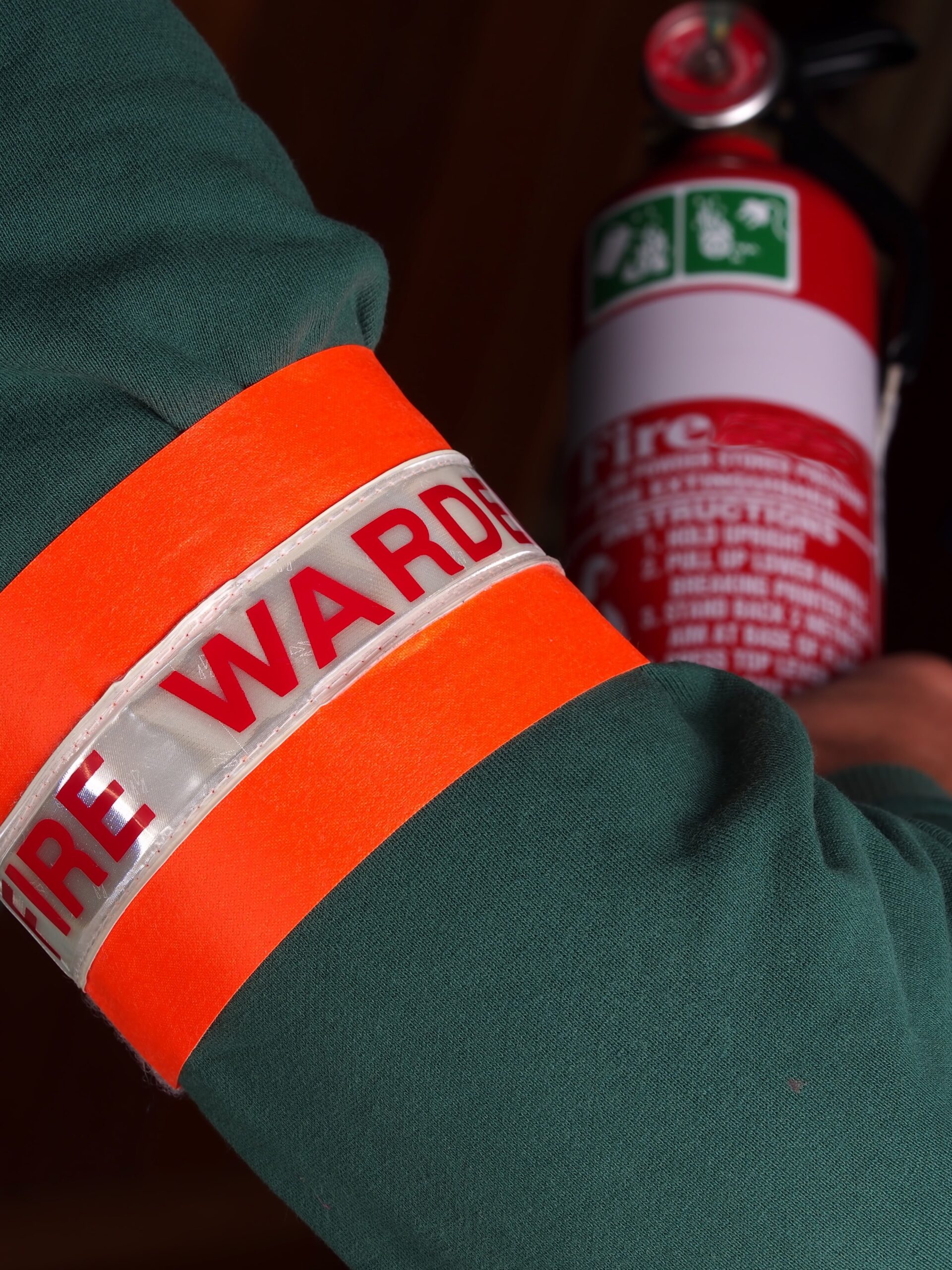
I have actually also seen chief emergency warden decisions conserve time by closing the loop on false alarms quick. Water mist incidents in industrial kitchen areas activate actuations that sound and scent significant. A chief warden that comprehends the system reasoning, checks the fire indicator panel background, validates with the location warden, and confers with the interactions officer can usually stand down securely within minutes, lessening disruption while maintaining safety.
Building the emergency control organisation around capability
The greatest chief warden I trained started as a floor warden that might open a stairwell, clear a corridor, and preserve a tranquil tone that individuals trusted. That foundation came from PUAER005 and hands-on drills. When she tipped up to chief warden training, the PUAER006 training course provided her the organized decision-making tools to scale her tranquil across a whole precinct.
Warden training ought to not be a tick-the-box exercise. The PUAER005 course creates the team's core abilities: operate as part of an emergency situation control organisation, sweep areas, use portable equipment within policy, and record clearly. The PUAER006 course develops management muscular tissues: lead an emergency situation control organisation, established concerns, intensify properly, manage communications, and user interface with initial responders. When the principal is trained deeply and the wardens are positive in their functions, the colour-coded hats become amplifiers of efficiency as opposed to camouflage for uncertainty.
For workplaces selecting a fire warden course or a chief warden course, request for scenario-rich sessions and localised content. A data center requires power-down choice playbooks. A laboratory requires spill, purification, and fume hood failure scenarios. A school requires lockdown and shelter-in-place practice that factors in young trainees and split schools. Pick fitness instructors who push beyond slides, run drills that really feel somewhat unpleasant, and debrief honestly.
Fire warden demands in the workplace
Legally, businesses have to provide safe systems of job and emergency situation procedures. The details vary by territory, yet the pattern is consistent: have an emergency plan, train individuals, practice, and keep documents. Fire warden requirements in the workplace are usually based in the danger account of the center and the variety of residents. For a tiny single-floor workplace, two or three wardens could be enough. For a multi-tenant tower, each lessee requires its very own emergency warden team by flooring, plus a building-level liaison structure.
Fire warden training demands flow from that plan. Everyone needs general passenger training at induction and refresher intervals. Wardens require specific training on alarm system types, evacuation courses, hands-on call factors, portable extinguishers if within plan, and interaction procedures. Chief wardens need command-level training and functional run-throughs with the fire indication panel, public address and caution systems, access control bypasses, lifts out of service treatments, and emergency solutions entry points.
Frequency matters. Annual refresher courses are minimums. Complicated sites schedule drills or partial drills at least two times a year. Shift-based operations repeat training per shift so the evening staff can carry out as well as day staff. After any type of real incident, instant debrief and targeted retraining fortify weak points while memory is fresh.
The hat is not a plan
I worked with a site that happily rolled out new safety helmets, white for chief warden, yellow for wardens, red for interactions, and green for first aid. They looked fantastic. 2 months later, a basic emptying turned chaotic because the strategy had actually not dealt with a padlocked side gateway, and the muster point signage was faded beyond legibility. People loaded into a parking area shared with delivery van. The safety helmets assisted the response, but they can not deal with a foundational oversight.
Colour coding need to rest on top of a meaningful emergency plan. That strategy establishes responsibilities, courses, backups, causes for escalation, and interaction channels. It also establishes the pile of physical assistances: signs, muster points, door hardware, lighting, wardens' keys, walkie-talkies, and fallback methods when power or network fails. If a chief warden gets hold of a white headgear and a radio, they ought to likewise be ordering authority, emergency warden course devices, and a plan they trust.
Selecting and maintaining gear
Helmets, vests, and accessories obtain thrown into cupboards and damaged throughout drills. If the text is peeling or the colour is dull, presence declines. I advise an easy gear lifecycle: light-use helmets get replaced every couple of years or after influence; stickers are rejuvenated every year; reflective tape is checked each daylight conserving changeover; spare dimensions are readily available to fit different head forms and hair volumes; and every function has a full collection housed in a plainly labelled closet next to the fire panel and at each muster point.
Radios need equal treatment. Chief wardens should have one-to-many communication. That indicates configured channels, billed batteries, and spare devices. In loud settings, a shoulder mic with a clip sits close to the ear and mouth, decreasing misheard directions. If your website uses digital radios, include fast recommendation cards the dimension of an ID badge.
Uniform constraints surface. Protection team often use dark attires with called for insignia. Fit white tabards over them for chief or deputy chief warden duties, rather than designing a new colour. In risky areas where flame-resistant clothes is mandated, choose FR-compliant vests and helmet devices rather than bypassing visibility.
Integration with emptying representations and signage
People absorb patterns even when they are not paying attention. If your emptying diagrams show a white-helmet number with "Chief Warden" in the tale, you enhance acknowledgment long before the next alarm system. Signage at muster points can reveal the very same role colours and icons. During drills, narrate the colours as you brief: "Adhere to the white safety helmet for command, your yellow area wardens will certainly guide you to the stairs, red communications continues to be at the panel, environment-friendly first aid is at the muster point." After two or three cycles, also infrequent visitors will certainly know where to look.
Common mistakes and just how to avoid them
Colour without redundancy stops working in smoky or low-light conditions. Fit head torches or collar lights on warden kits. Reflective strips help with presence when the power goes down. I additionally recommend support helmet colour with function name in huge font front and back. Individuals with colour vision shortage benefit from the text confirmation.
Mixed legacy equipment creates sound. If previous wardens kept their helmets when they left, you can end up with three "chief warden" hats in a cabinet. Audit equipment quarterly. Collect, relabel, and allocate appropriately. A simple sign-in/out sheet attached to the closet maintains it honest.

Outsourced professionals and visitors commonly do not recognize your system. Induction videos ought to reveal the colours and the equipment. Reception can present warden photos with function colours. During a drill, ask a handful of visitors who they complied with and why. If they can not describe the white safety helmet or the yellow warden, you have an interaction gap.
How hat colour engages with PUAER005 and PUAER006 competencies
The puafer005 course teaches wardens to operate as part of an emergency situation control organisation: take guidelines, carry out sweeps, and report. The palette supports those features by reducing friction. A yellow-helmet warden can promptly recognize the white-helmet chief in a group and supply a concise circumstance report. Block by brick, those records develop the principal's psychological model.
The puafer006 course focuses on management. The chief warden makes use of setting and authority to establish pace and direction. The white headgear comes to be an aesthetic anchor for all wardens and residents, simplifying the pecking order. In a drill where the chief relocated between puafer005 training standards two stairwells to manage flow, I saw a flooring warden time out for advice rather than leaving individuals to rise into an obstructed half-landing. That time out stopped a crush at a narrow turn. Training developed the judgment; the white headgear signposted the individual with the wider view.
Edge cases you must prepare for
High-rise structures with pressurised stairways change how you move individuals. Sound at stair doors can drown radio web traffic. In these cases, white headgears need to couple with a basic hand signal collection concurred during training. An increased open hand can mean hold position. A lower arm factor can mean take the alternative stair. Instruct the signals to wardens and security so the chief can route flows even when radios howl with feedback.
Campuses with several structures typically share a solitary chief warden during low-occupancy durations. The color scheme ranges if you add a replacement chief warden in white and regional flooring wardens in yellow per building. The replacement can take command of a building while the chief communicates with responders at a campus command post. If you run a change model, turn the white headgear throughout competent leaders and record the responsibility roster so function and protection know who holds the function at any type of offered hour.
Special-needs evacuations introduce time lag. A mobility-impaired employee can not equal a descending group. Plan and method refuge factors, evacuation chairs, and assistant tasks. In those situations, the chief warden's white headgear aids responding firemens and paramedics discover the decision-maker fast, so life security resources are focused where they are most needed.
Drills that develop behaviors you can trust
A well-run drill feels calm on the surface and extreme under the hood. Establish a defined objective. For example, measure the moment it considers the chief warden to get standing reports from all areas. Or test whether the first aid policeman in green can reach the much muster point within three minutes. For realism, introduce a blocked path or a missing-person report. Later, debrief while details are fresh: what slowed you down, that required assistance, which directions were vague, which devices stopped working or disappeared.
Over time, track a couple of metrics. Discharge time to remove the structure ought to trend downward up until it secures at a risk-free number for your occupancy. Condition record efficiency must approach one hundred percent on regular drills. Radio technique should boost to ensure that the primary obtains short, clear, organized messages. None of these require spreadsheets if your site is little, yet an easy log assists principals reveal due persistance to executives and auditors.
Frequently asked sensible questions
Do we require helmets if we already use vests? If your setting is low-risk and interior, high-visibility vests with clear function labels can work, specifically for workplaces. Safety helmets add worth in congested or enterprise zones, at exterior muster factors, and in any kind of room with falling-object or head-bump threat. Many sites carry both, utilizing headgears for wardens that move with the site and vests for interactions or function roles.
Can we assign one white headgear to any type of principal working? Yes, however classify the helmet with "Chief Warden," store it in a foreseeable area, and pair it with an easy on-duty lineup. If you count on a roaming white safety helmet without a named leader, you risk a hesitation at the start of an incident.
How numerous wardens do we require? Use risk and occupancy as your overview. On open-plan floors, a proportion of one warden per 20 to 30 people is common, with at the very least 2 per floor to avoid single points of failing throughout leave. In high-risk zones, raise the thickness and include alternates per shift.
What concerning multilingual workforces? Colour helps throughout language barriers, however do not count on it alone. Pre-plan pictogram signs, fundamental command cards in essential languages, and buddy systems where bilingual team support sweeps. Train short verbal commands and hand signals that function under stress.
What documents should we keep? Maintain training conclusion, role tasks, pierce logs, debrief activities, and gear examinations. If you make a modification to paths or tools, document the rationale and the date.
A fast readiness checklist you can run this week
- Confirm your color scheme aligns with the common convention: white chief warden, yellow wardens, red communications, environment-friendly very first aid. Audit your equipment: safety helmets or vests present, readable, reflective, and kept predictably near the fire panel and muster points. Verify your lineup: chief and deputy chief warden coverage throughout all shifts, with alternates. Run a short comms drill: radio check, standing report layout, and hand signals at stairs. Update induction products to show colours, function names, and muster locations.
Final ideas from the field
The concern of chief warden hat colour seems insignificant up until you attempt to take care of 700 individuals down 2 stairwells with smoke in the atrium and a delivery truck blocking your main muster. In those minutes, little frictions accumulate. The white helmet cuts seconds off searches and choices. The yellow hat draws eyes towards the appropriate door. The red vest supports comms at the panel. The green cross draws the wounded to help.
Do not stop at colours. Invest in individuals. Select a warden course that drills decision-making. Place your potential leaders through chief fire warden training that consists of genuine walk-throughs with your panel and doors and radios, not simply a classroom. Deal with the puafer005 and puafer006 courses as component of a longer habit-building arc rather than separated certificates. Maintain your emergency warden training fresh with circumstances drew from your actual threat register.
If you do those things, the next time a person asks what colour helmet does a chief warden wear, you will certainly respond to white without thinking, and your group will certainly understand specifically who to adhere to when it counts.
Take your leadership in workplace safety to the next level with the nationally recognised PUAFER006 Chief Warden Training. Designed for Chief and Deputy Fire Wardens, this face-to-face 3-hour course teaches critical skills: coordinating evacuations, leading a warden team, making decisions under pressure, and liaising with emergency services. Course cost is generally AUD $130 per person for public sessions. Held in multiple locations including Brisbane CBD (Queen Street), North Hobart, Adelaide, and more across Queensland such as Gold Coast, Sunshine Coast, Toowoomba, Cairns, Ipswich, Logan, Chermside, etc.
If you’ve been appointed as a Chief or Deputy Fire Warden at your workplace, the PUAFER006 – Chief Warden Training is designed to give you the confidence and skills to take charge when it matters most. This nationally accredited course goes beyond the basics of emergency response, teaching you how to coordinate evacuations, lead and direct your warden team, make quick decisions under pressure, and effectively communicate with emergency services. Delivered face-to-face in just 3 hours, the training is practical, engaging, and focused on real-world workplace scenarios. You’ll walk away knowing exactly what to do when an emergency unfolds—and you’ll receive your certificate the same day you complete the course. With training available across Australia—including Brisbane CBD (Queen Street), North Hobart, Adelaide, Gold Coast, Sunshine Coast, Toowoomba, Cairns, Ipswich, Logan, Chermside and more—it’s easy to find a location near you. At just $130 per person, this course is an affordable way to make sure your workplace is compliant with safety requirements while also giving you peace of mind that you can step up and lead when it counts.